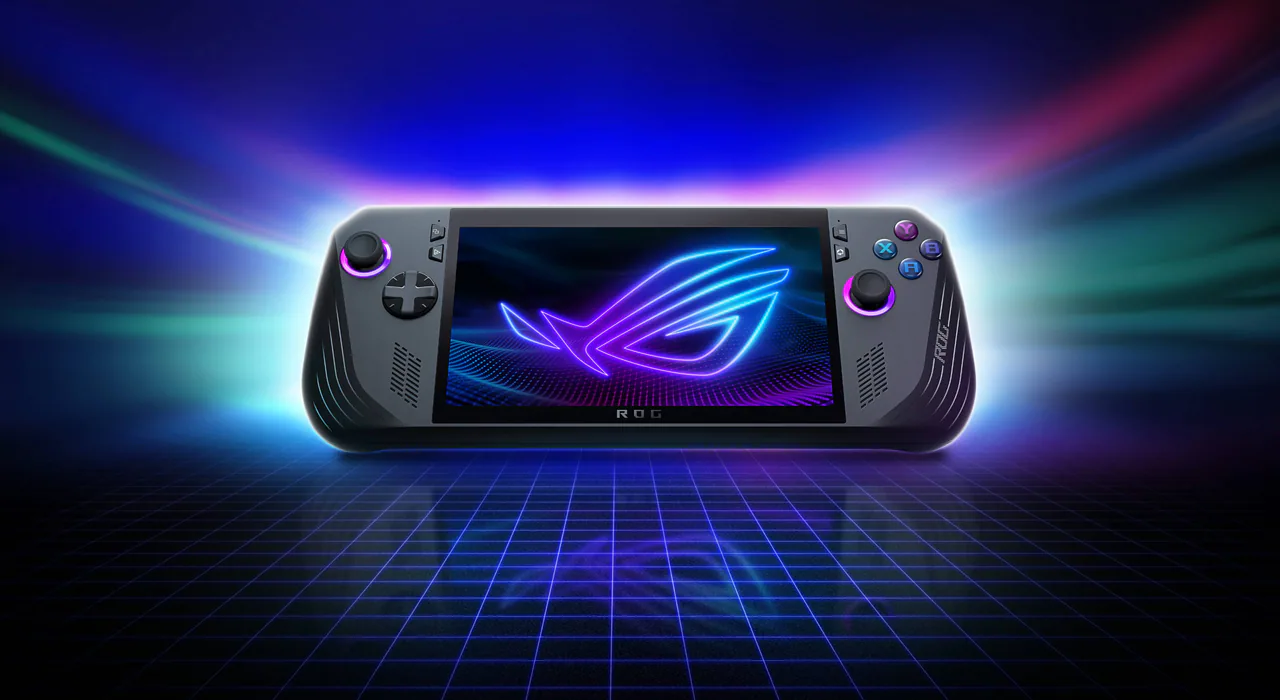
Full review
ROG Ally X remains the established Windows handheld benchmark for players who want broad PC launcher access without jumping to the newest premium tier. Its 80Wh battery, 120Hz VRR screen, 24GB memory, and improved ergonomics still make it one of the easiest Windows models to justify.
What works well: Broad Windows launcher support makes it a strong fit for Steam, Game Pass, Epic, GOG, mods, and mixed PC libraries. The 80Wh battery, 120Hz VRR display, stronger cooling, and improved grips address many first-generation Windows-handheld complaints. It has enough performance and community familiarity to feel like a known quantity next to newer, more specialized rivals.
Main tradeoffs: Windows setup, updates, and sleep/wake behavior still make it less console-like than SteamOS or Nintendo. The LCD panel is smooth, but OLED-first shoppers have better display-led options. Newer Z2 and Lunar Lake handhelds now beat it in specific premium lanes.
Why it ranks here
Ranked fourth as the established Windows value/performance benchmark. The 80Wh battery, VRR display, 24GB memory, stronger ergonomics, and broad launcher support still make it easier to recommend than many Windows handhelds, though the newer Xbox Ally X and large-screen models now outshine it in specific premium lanes. Compared with #3 ASUS ROG Xbox Ally X, ASUS ROG Ally X gives up some all-around confidence or simplicity but earns its spot through strong windows performance and launcher coverage, excellent 80wh battery for the class. It stays ahead of #5 MSI Claw 8 AI+ because its buyer fit is clearer for this ranking’s weighted criteria, even though MSI Claw 8 AI+ may be better for shoppers who specifically want windows handheld buyers wanting an 8-inch display and modern connectivity.